
The importance of context in educational activity
Tuttoscuola no. 549 · Obiettivo docente
Identity · mission · network
We believe Ignatius of Loyola still has much to say — that his insights from five centuries ago still make sense, remain timely, and have a future in a complex school system governed by civil law, following common curricula, and engaged in many pedagogical experiments to meet new educational challenges. In our context, therefore, the formation of professional figures is central: both because of the tradition that distinguishes us, and because educators are not just any professionals.
In our colleges Jesuits are now a minority: almost all teaching and non-teaching staff are lay women and men from diverse backgrounds. It is therefore essential to involve them directly throughout their professional journey, making them companions in a shared mission. Anyone who asks what makes Jesuit schools special, or why pupils and families love them, must first be able to recognise it in the teachers and in the educational model: «In a school of the Society, as Fr Hans Peter Kolvenbach, former Superior General of the Society of Jesus, liked to say, the principal responsibility for moral and intellectual formation belongs, ultimately, not to programmes or to school or extra-curricular activities, but to the teacher, under God's guidance». Formation prepares the laity to take on roles of ever greater authority and responsibility, lived in servant leadership that joins human excellence and academic excellence.
Approfondimenti
Tuttoscuola no. 549 · Obiettivo docente
In dialogue with Jesuit schools
Tuttoscuola no. 544 · Obiettivo docente
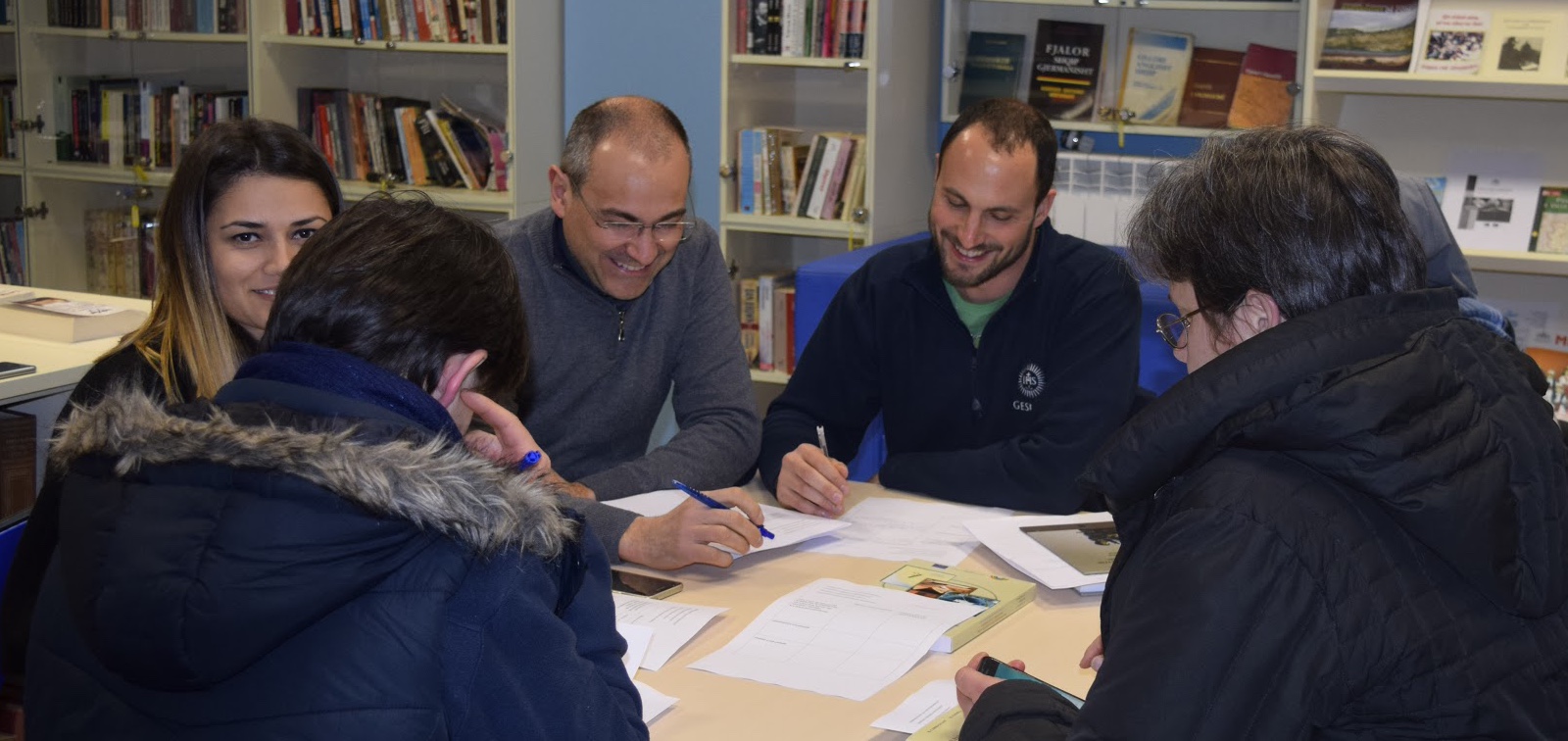
For this reason, from 2004 an appropriate instrument shared with all the colleges of Italy was conceived: thus CeFAEGI was born (Centro di Formazione Attività Educativa dei Gesuiti d'Italia), with the task of authoritatively promoting for educators a regular, progressive and methodologically structured formation pathway. At CeFAEGI a reference team of Jesuits and lay women and men works for the formation of educators of member colleges of the Foundation and of other institutions or schools that wish to refer to the Jesuit educational tradition. The aim is to keep alive and promote the values of Ignatian spirituality applied to school education: fundamental here is openness to service and responsibility, so as to form men and women for others, sensitive and open to the promotion of justice.
The Jesuits' commitment to schools would make no sense if we did not think of the school as an apostolic instrument able to educate by caring for the whole person of the pupil. «The education of the young, Fr Kolvenbach also said, is perhaps the clearest form of participation in God's creative work», but to do this one must educate by teaching: teaching must go beyond mere transmission of content and promote the integral formation of the person. We seek to do this with all our strength, involving, beyond pupils, also teachers and families — important components of our apostolic project. One then understands how important it is for us to create collective, group work that yields a shared outcome, a vision and a methodology.
We seek to form teachers able to stand alongside families in a fundamental educational alliance, and we prepare them for a double task: «that of guide of pupils' lives in the search for truth and life values, and that of academic guide» (Fr Luiz Fernando Klein SJ, Guía Práctica del Paradigma Pedagógico Ignaciano, 1997). We teach them to carry it out as Ignatius of Loyola would (who was himself a layman, not a consecrated religious, when he wrote the Spiritual Exercises), asking as principal requirement a readiness to engage and openness to change. The formation in question is based specifically on a mode commonly described as reflective action upon one's own way of understanding and acting. It complements and goes beyond the necessary task of updating that characterises teaching in a world of rapid change.
We do this above all in residential seminars at national level, both for newly appointed and for experienced teachers, at two different levels: the first is the introductory level, to which all recently hired teachers are sent; the second is continuous formation of systematic deepening of the methodology that constitutes the so-called Ignatian pedagogical-didactic «paradigm» (IPP). Formative proposals, always residential and lasting several days, for teachers and collaborators including those in leadership in Jesuit «colleges», are also set at levels of gradual and growing depth, aiming to let participants taste and experience progressively Ignatius' own human and spiritual experience, to which the inspiration and methodology refer. Thus one may first undertake the colloquium, and finally the personally guided experience of the Spiritual Exercises, from whose annotations derive many of the principles that accompany the pupil's learning and growth along the school journey.
The Association, founded as a non-profit with unlimited duration, pursues civic, solidarity and social-utility aims, shaping its structure according to the principles of democracy, election and unpaid offices, with an express ban on distributing profits. In this light, its principal purpose lies in the formation, qualification and professional updating of figures in the world of school and education — for teaching and non-teaching staff of Nursery, Primary and Secondary schools of the Province's Colleges — together with scientific and didactic development in the cognitive, pedagogical and social sciences.
Society of Jesus
Institutional links and resources of the Jesuit network. Educate Magis is the bridge to the global network; CeFAEGI remains the formation centre of the Euro-Mediterranean Province.